Property technology pilots
Controlled property technology pilots for sectional title schemes: metering, levy, maintenance and access systems, measured before any wider rollout.

Africa and infrastructure
A smart city uses data, digital tools and coordinated infrastructure to improve specific urban services such as mobility, utilities or public information. For African metros, the useful starting point is a defined service problem, not a technology purchase. Set a measurable public objective, confirm data governance and interoperability, and test a practical pilot before scaling. Technology should support accountable service delivery rather than create a disconnected platform.
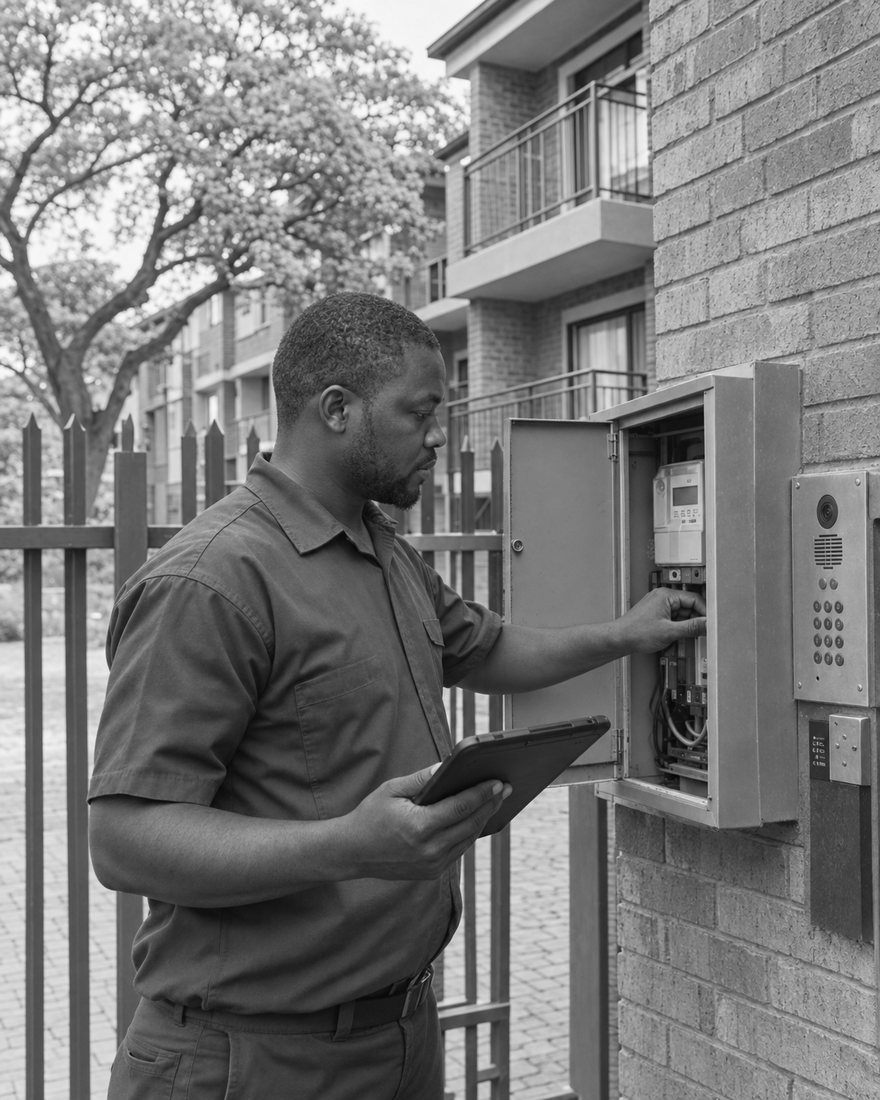
A smart city initiative should identify a concrete urban problem, the public authority responsible and the people affected. Examples might include service reporting, traffic information or monitoring infrastructure assets. Define what better service would look like and how it can be measured using reliable data. Avoid describing a platform as the outcome. A clear service objective helps compare technology options and prevents procurement from being driven by novelty.
Decide who owns and maintains data, who can access it, how systems exchange information and how residents can raise concerns. Consider cybersecurity, privacy, procurement lock-in, accessibility and continuity if a vendor changes. Interoperability requires standards and contract terms, not just compatible devices. Involve operational teams and communities early so that data collection, interfaces and service changes suit the people expected to use them.
A limited pilot can test assumptions, costs, usability, maintenance and institutional readiness before a larger commitment. Define baseline information, success measures, exit conditions and ownership of equipment and data. A pilot should not be represented as proof of metro-wide impact. Dev 360’s property technology pilots focus on testing technology in property settings; broader city programmes need the relevant public authority and local procurement process.
No. Select data sources that are necessary for a defined service objective. Sensors are only one option and may add cost and maintenance needs
The project should document data roles, access, retention, security and permitted use. Responsibilities depend on the service, parties and applicable law
Set interoperability, data export, documentation, transition assistance and service continuity requirements in procurement and contract terms Confirm this before work starts
Controlled property technology pilots for sectional title schemes: metering, levy, maintenance and access systems, measured before any wider rollout.
Independent technology advice before you buy or build: system selection, supplier and quote reviews, connectivity, infrastructure and digital presence.
The documents lenders and investors expect in an infrastructure data room: feasibility, land, permits, environmental studies, offtake and the financial model.
Talk to Dev 360