Rooftop energy-as-a-service: solar without a large special levy
How a body corporate can install rooftop solar without a large special levy, using energy-as-a-service, and the STSMA resolutions and NERSA rules that apply.

Body corporates and sectional title
It depends on size and grid connection, not on whether power is exported. A grid-connected system of 100 kW or less registers with the distributor, Eskom or the licensed municipality. A grid-connected system above 100 kW registers with NERSA. A system with no grid connection is exempt from registration.
NERSA clarified in 2026 that the duty to register an embedded generation facility depends on whether it has a point of connection to the grid and its installed capacity. Facilities of 100 kW or less with a grid connection register with the relevant distributor; those above 100 kW register directly with NERSA; facilities without a grid connection are exempt.
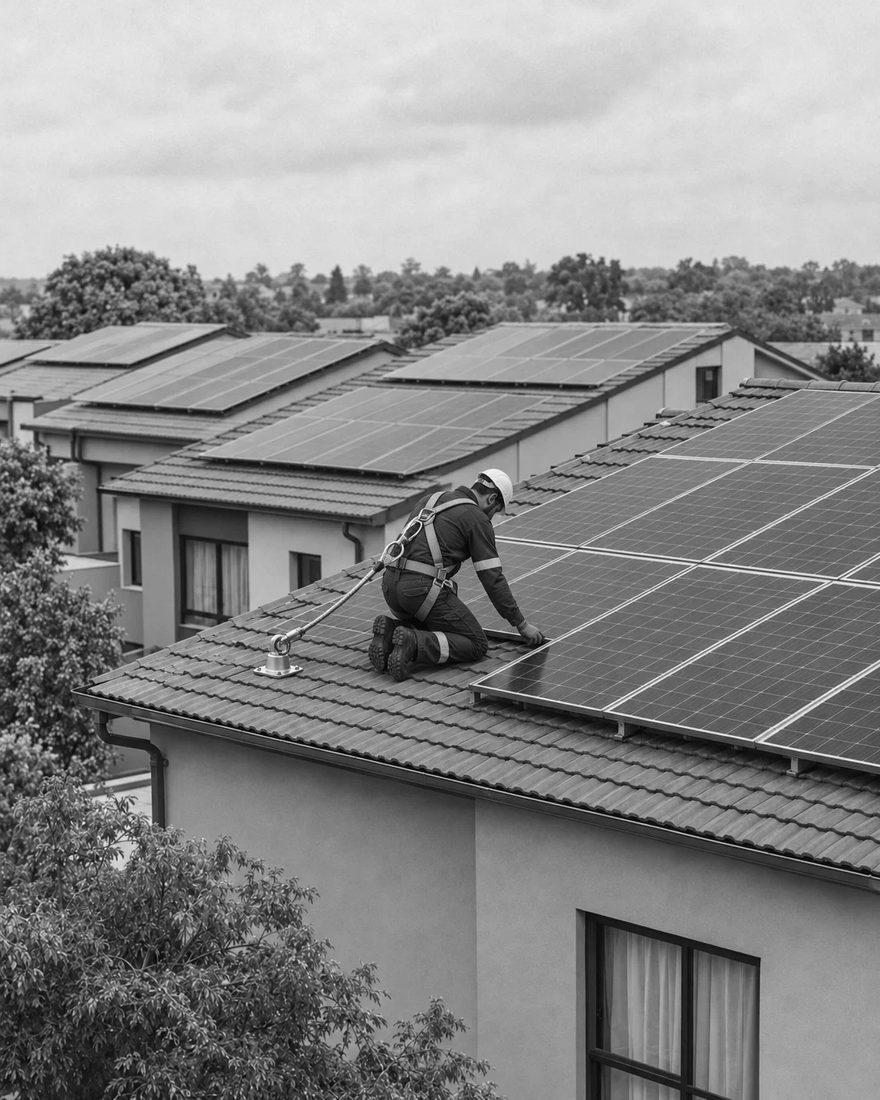
Roofs are common property, so a scheme-wide installation needs the body corporate’s approval by the resolution the Sectional Titles Schemes Management Act requires, plus agreements covering use of the roof, metering, maintenance and who pays.
Some schemes avoid a large special levy by having a provider install and operate the system and sell the power. Read how rooftop energy-as-a-service works, and see Dev 360’s planned Energy as a Service initiative.
Check each source’s current version before acting.
Only if it is grid-connected and above 100 kW. Grid-connected systems of 100 kW or less register with Eskom or the licensed municipality; off-grid systems are exempt.
No. NERSA has clarified that registration depends on grid connection and installed capacity, not on whether electricity is exported.
The body corporate, by the resolution the Sectional Titles Schemes Management Act requires, supported by written agreements on use, metering and maintenance.
How a body corporate can install rooftop solar without a large special levy, using energy-as-a-service, and the STSMA resolutions and NERSA rules that apply.
How AI can lower common-property energy costs by scheduling batteries, pumps and lighting around solar output and tariffs, plus the approvals schemes need.
Who pays for generators, inverters, batteries and water tanks in a sectional title complex, and which resolutions PMR 29 requires before installation.
Talk to Dev 360