Africa’s infrastructure gap is a preparation problem as much as a money problem
Africa needs USD 130 to 170bn a year for infrastructure. Why projects stall before financial close, and what works in roads, energy, water and data.

Energy and utilities
Energy-as-a-service lets a facility use solar, batteries or efficiency upgrades without buying them. A provider funds, installs, owns and maintains the system, and the site pays per kWh or a fixed fee. It replaces capex with an operating cost. In South Africa, check NERSA registration, municipal approval and, for sectional title, STSMA resolutions.
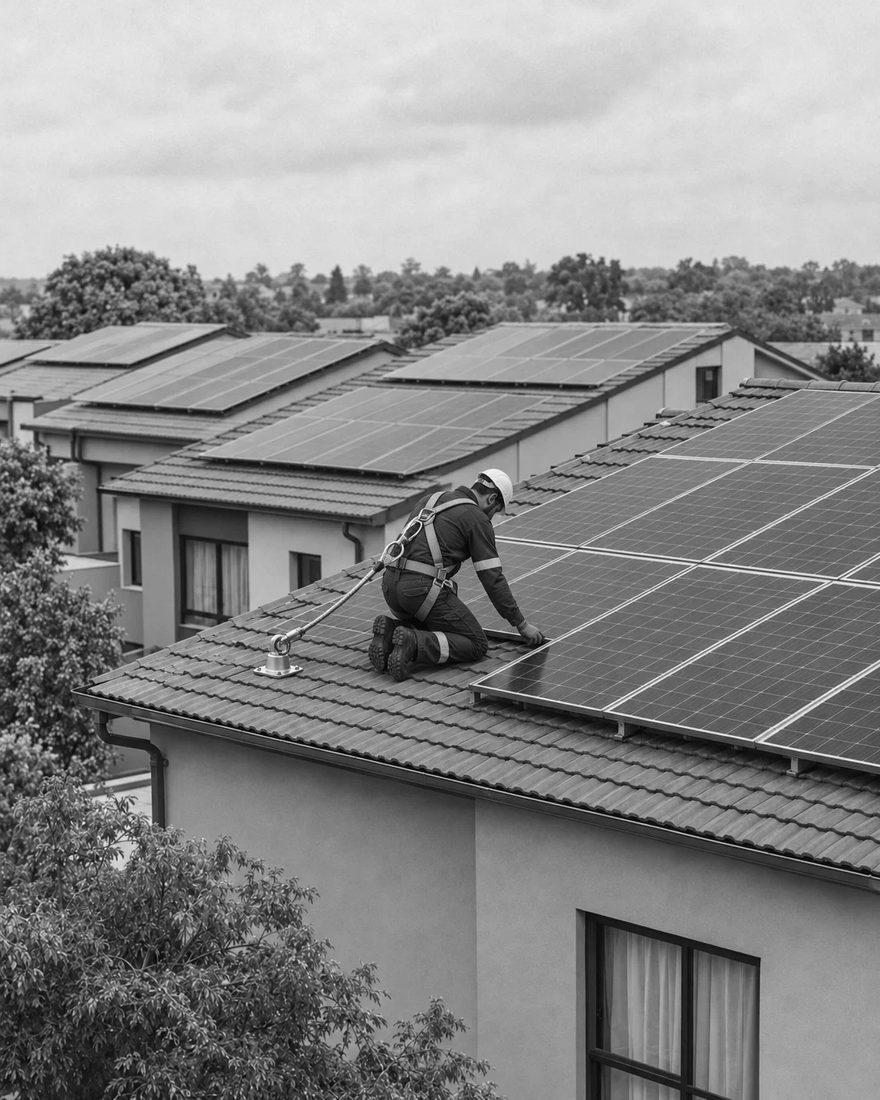
NERSA distinguishes grid-connected systems of 100 kW or less, which register with the distributor (usually the municipality), from larger systems, which generally register with NERSA. All electrical work needs a Certificate of Compliance. Selling power to third parties raises separate licensing and municipal questions.
A roof lease or power agreement on common property needs the right resolutions. See rooftop solar energy-as-a-service for sectional title.
The IEA estimates about 600 million Africans lack electricity access. Mission 300, launched by the World Bank and AfDB in 2024, aims to connect 300 million people by 2030.
Check each source’s current version before acting.
Important. Savings are estimates, never guarantees. Mention STSMA resolutions and NERSA rules before any sectional title project.
See also: Energy as a Service.
Energy-as-a-service lets a site use provider-owned energy equipment without buying it. The provider funds, installs and maintains solar or batteries, while the site pays for energy or a fixed service fee. In South Africa, check municipal and NERSA requirements.
Not always. In South Africa, grid-connected systems of 100 kW or less register with the distributor, usually the municipality; larger systems generally register with NERSA. Electrical work also requires a Certificate of Compliance, so confirm the applicable route before connecting a system.
Yes, if the body corporate obtains the approvals that apply to the proposed project. A roof lease or improvement on common property may require resolutions under the STSMA and PMR 29, as well as municipal approval for a South African grid-connected installation.
Africa needs USD 130 to 170bn a year for infrastructure. Why projects stall before financial close, and what works in roads, energy, water and data.
Lessons from Senegal, Durban and Kigali on when water PPPs improve reliability and access, and how tariff design protects poor households.
Only 38% of Africans used the internet in 2024. Why fibre and broadband matter for manufacturing and services, and what the World Bank's estimate…
Talk to Dev 360