
Dev 360

Body corporates and sectional title

Backup power and water for complexes: who pays and who approves?

In short

Backup systems on common property are normally a body corporate cost, funded through levies, because the scheme must maintain common property and its services. Approval depends on the type: a reasonably necessary improvement needs 30 days' written notice, plus a special resolution if a member asks to discuss it. A non-essential improvement needs a unanimous resolution under PMR 29.

By the Dev 360 teamSouth African context
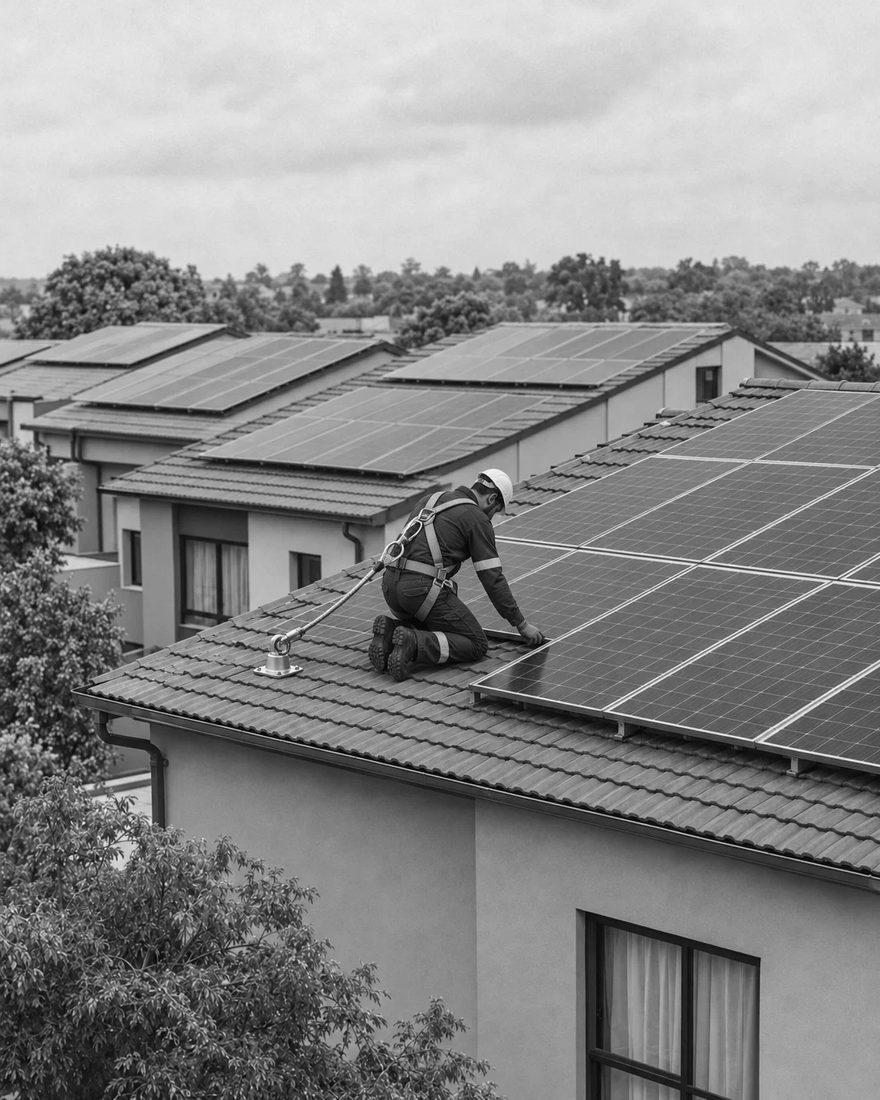
Technician in a safety harness inspecting solar panels on the roof of a sectional title complex

Key takeaways

  • Common-property backup systems are usually funded through levies
  • PMR 29 sets the approval route, which depends on whether the improvement is reasonably necessary
  • Electrical work needs a registered contractor and a Certificate of Compliance
  • Plan replacement of batteries and pumps in the 10-year plan

Who pays

The STSMA makes the body corporate responsible for maintaining common property and its services and funding them from contributions (section 3(1)). A generator, inverter, battery bank or water tank serving the common property is therefore normally a levy-funded cost. Check the sectional plan and rules: equipment serving one section or exclusive-use area may be the owner's responsibility.

Which approval applies

  • Reasonably necessary improvement: give members at least 30 days' written notice with the estimated cost, funding, motivation and drawings. If a member asks for a meeting during that period, a special resolution is needed (PMR 29(2)).
  • Not reasonably necessary (luxurious): a unanimous resolution (PMR 29(1)).

Whether backup power is "reasonably necessary" depends on the facts. A pump that keeps water flowing to upper floors is easier to justify than a full-site battery system.

Compliance on install

  • Electrical work by a registered electrical contractor, with a Certificate of Compliance under the Electrical Installation Regulations
  • Municipal approval for grid-tied embedded generation
  • Fuel storage, noise and fire rules for generators
  • Battery and pump replacement added to the 10-year plan

Related: solar energy-as-a-service for sectional title.

Sources

Check each source’s current version before acting.

Through the PPP

Participants who deliver this

These PPP participants deliver this kind of work.

Dev 360 capability
Construction and trades

Electrical capability

Your reliable electrical contractor.

Services: Residential installations and repairs · Commercial and industrial installations · Inspections and certificates of compliance · Solar and backup power · Lighting design and LED upgrades · Earthing, bonding and lightning protection · Infrared thermography · Emergency repairs and maintenance

Not a guarantee of work. All participants

Short answers

Who pays for a generator in a sectional title complex?

If the generator serves common property, the body corporate normally pays through levies because it maintains and funds shared services. Equipment serving one section or an exclusive-use area may instead be the owner's responsibility. Check the sectional plan and rules, and follow the STSMA approval process.

Do owners need to vote before trustees install backup power?

Usually, but the vote depends on how the improvement is classified under PMR 29. A reasonably necessary upgrade requires 30 days' written notice and a special resolution if a member requests a meeting; a non-essential improvement needs a unanimous resolution in a South African scheme.

Does a solar or battery installation need a Certificate of Compliance?

Yes. South African electrical installation work requires a Certificate of Compliance from a registered person under the Electrical Installation Regulations. A grid-connected solar system also needs the applicable municipal connection approval, so trustees should confirm both the installation and connection requirements before commissioning.

Get in touch