What does a business energy audit check?
Use this energy audit checklist to review business consumption, tariffs, equipment, peak demand and practical efficiency actions in South Africa.

Energy and utilities
Before installing rooftop solar, a business should check its electricity profile, roof condition and structure, connection requirements, approvals, contract model and maintenance plan. A system designed around daytime demand may perform differently from one expected to serve evening loads. Confirm the site conditions and applicable municipal rules before appointing an installer or ordering equipment.
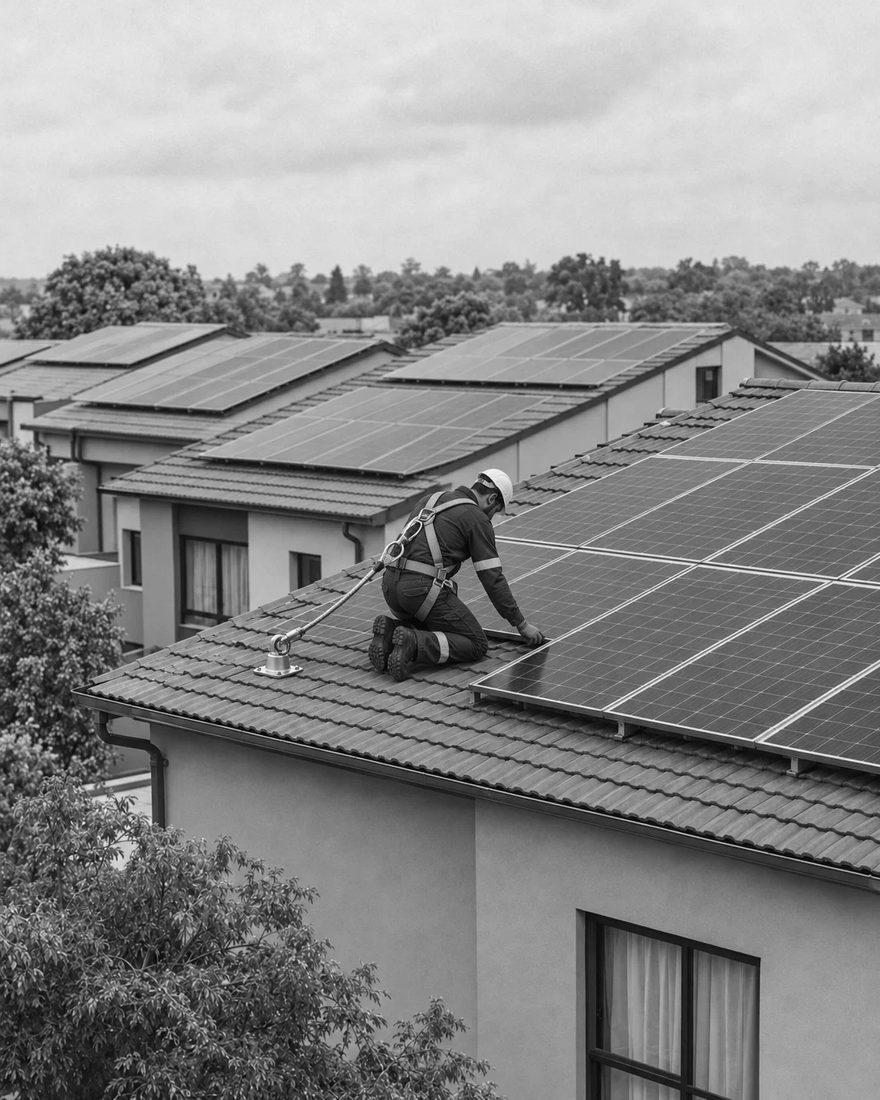
Collect recent electricity bills and, where available, half-hourly or hourly interval data. Record operating hours, seasonal changes, demand peaks and critical equipment. A roof survey should identify usable area, shading, waterproofing condition, access routes and the location of electrical equipment. A structural professional may need to confirm whether the roof can accommodate panels and related loads. These checks make the design more useful than estimating output from roof area alone.
Ask the municipality or electricity distributor which connection process applies to the property and system. Requirements can differ by supply area and may include an application, technical documents, approved equipment, inspection, meter changes or permission before parallel operation. Do not assume that a small system is exempt from registration or connection rules. Keep written confirmation and approved drawings with the property records. For a commercial fit-out or wider site project, coordinate electrical, roof and operational work through a clear delivery plan.
Compare outright purchase, lease and power purchase options by looking at ownership, payment basis, escalation terms, performance assumptions, insurance, equipment replacement and exit rights. Ask who is responsible for monitoring, cleaning, repairs and compliance over the contract term. Model expected savings against the actual tariff and usage profile, not a headline yield. Dev 360 can help businesses coordinate project requirements through its commercial turnkey projects service. Obtain independent technical and legal review where needed.
Check each source’s current version before acting.
Not necessarily. Grid-connected systems commonly shut down when the grid fails unless designed with suitable islanding controls and storage. Ask the designer to explain which circuits remain powered, how changeover works and what safety equipment is included.
Connection and registration requirements depend on the system, site and electricity distributor. Ask the relevant municipality or distributor for the current process before installation, and retain written approvals and commissioning records.
It should state the design assumptions, expected generation method, equipment, connection scope, approvals, warranties, maintenance responsibilities, exclusions and payment terms. Compare proposals against your measured electricity demand.
Use this energy audit checklist to review business consumption, tariffs, equipment, peak demand and practical efficiency actions in South Africa.
Battery storage sizing basics for South African buildings: estimate critical loads, backup duration, usable capacity, inverter power and operating needs.
Compare a solar power purchase agreement with a lease for a South African business, including ownership, payments, maintenance and contract risks.
Talk to Dev 360