Commercial turnkey projects
Commercial fit-outs, refurbishments and new builds managed from brief to handover through one accountable point of contact in Gauteng.

Commercial projects
A commercial fit-out contingency is a separately identified allowance for defined unknowns, not a pool for unapproved upgrades. Set the project scope and cost plan first, record risks such as concealed services or incomplete information, then agree who may approve use of the allowance. Dev 360 can coordinate a commercial turnkey project around that brief.
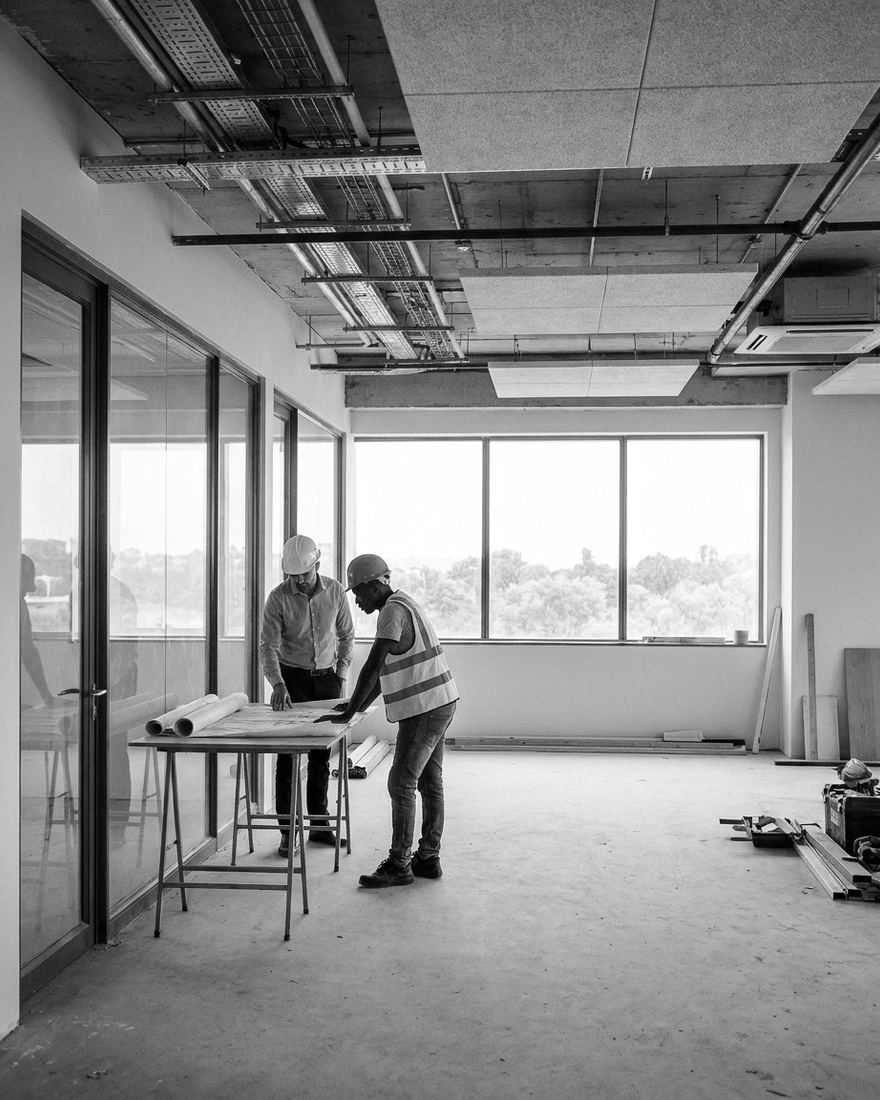
A useful contingency starts with a measured scope, current drawings and written assumptions. List what is included, what is excluded and which items remain provisional. A cost plan should distinguish construction work, professional services, statutory requirements, furniture or equipment, and any landlord requirements. Without those boundaries, a contingency percentage can conceal missing scope rather than protect against uncertainty. Ask the project team to explain the basis of each allowance and how it will be updated as information improves.
Record project-specific risks instead of relying only on a rule-of-thumb allowance. Existing ceiling voids may hide services, building records may be incomplete, or work may need to happen outside normal trading hours. For each risk, note its likelihood, possible cost effect, owner and early investigation that could reduce uncertainty. Keep this risk provision visible in the forecast and do not treat it as authority to spend. A change to the agreed brief should be assessed separately, with its effect on cost and programme documented.
Before work starts, agree who can request, assess and approve a draw on contingency, and what evidence is needed. The report should show the original allowance, approved commitments, actual expenditure and remaining exposure. If the forecast exceeds the approved budget, pause and present options such as reducing scope, changing specification or revising the budget. A project manager or turnkey coordinator can keep these decisions in one record, but the client remains responsible for approving expenditure under its governance arrangements.
No. A contingency is generally an allowance for identified or residual project risks, while a provisional sum is an estimate for work whose scope or price is not fully established. Contract documents define how each is treated, so confirm the wording before appointment.
The client should name an authorised decision-maker and set approval limits before construction. The project team can assess evidence and options, but spending should follow the client’s documented authority and the contract change process.
Not automatically. An upgrade is usually a scope change and should be priced, approved and assessed for programme impact. Keep it distinct from a risk allowance so the client can see whether the original project remains within its approved budget.
Commercial fit-outs, refurbishments and new builds managed from brief to handover through one accountable point of contact in Gauteng.
What to prepare before a commercial project: a written brief, budget range, site and building information and the approvals likely to be needed.
Turnkey delivery versus appointing separate contractors: accountability, control, risk, cost and programme, and which suits which kind of project.
Talk to Dev 360